
Access Control#
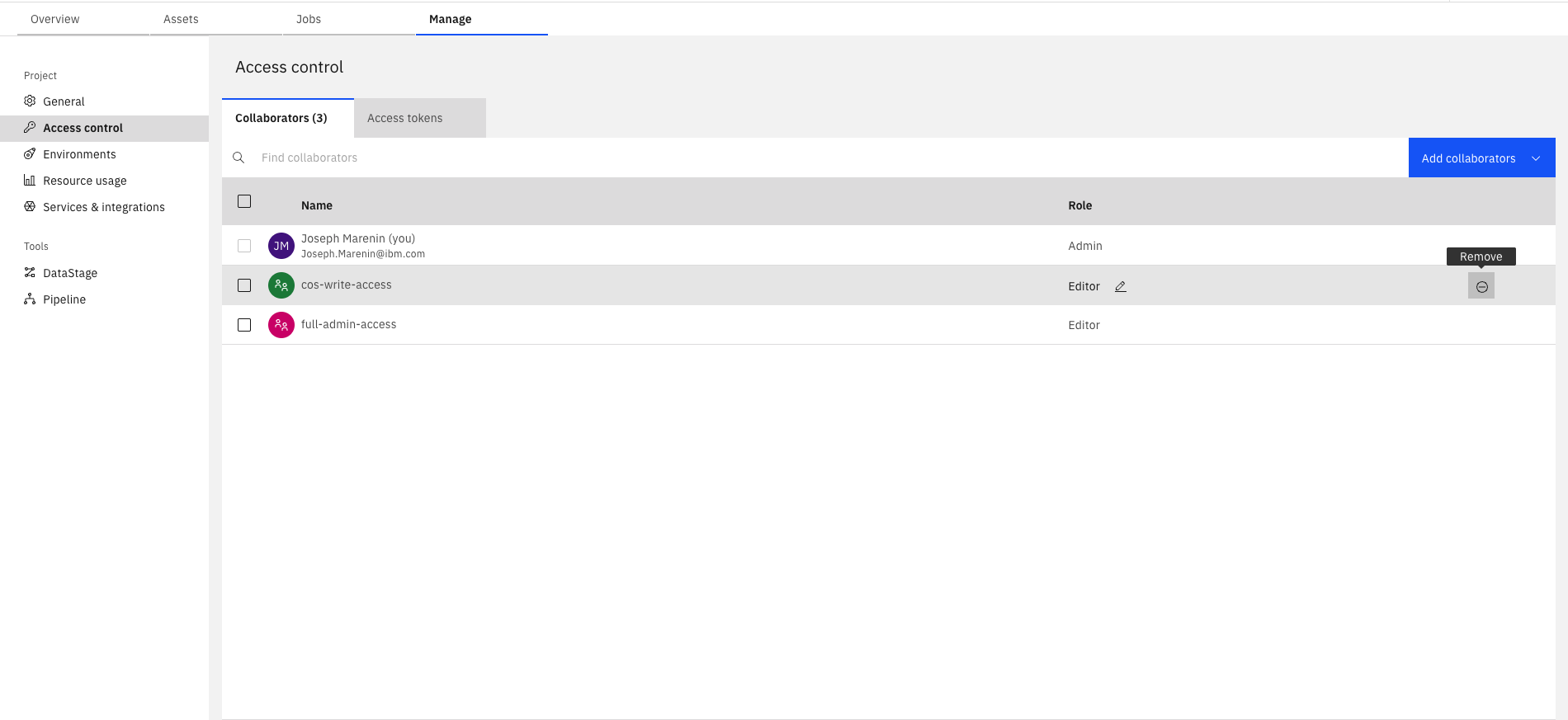
In UI, you can manage access control to a project under the Manage -> Access Control tab. The SDK provides functionality to interact with the access control API.
- This includes operations such as:
Listing project collaborators
Adding project collaborators
Updating project collaborators’ roles
Removing project collaborators
Listing Collaborators#
In the UI, you can see the list of project collaborators under the Manage -> Access Control tab.
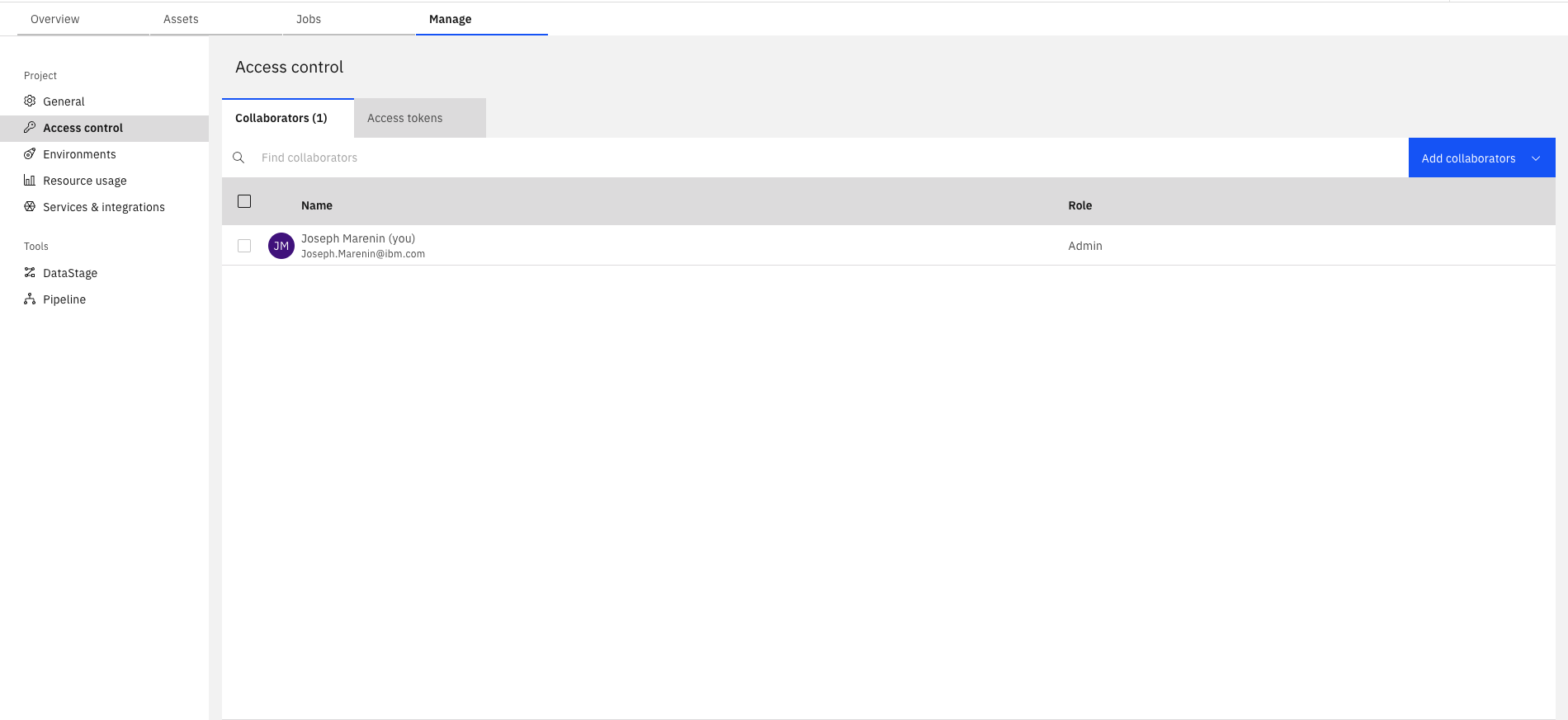
In the SDK, project collaborators can be retrieved using the Project.collaborators property.
This property returns a ProjectCollaborators object.
>>> project.collaborators
[...ProjectCollaborator(...)...]

>>> project.collaborators.get_all()
[...ProjectCollaborator(...)...]

>>> collaborator = project.collaborators[0]
>>> collaborator
ProjectCollaborator(...)
You can also retrieve a specific project collaborator by using the ProjectCollaborators.get()
method and passing in a user_name.
>>> project.collaborators.get(user_name='myuser@ibm.com')
ProjectCollaborator(user_name='myuser@ibm.com', ...)
Adding Collaborators#
In the UI, to add a collaborator you can press the Add collaborators button, where it will prompt you on which type of collaborator you would like to add.
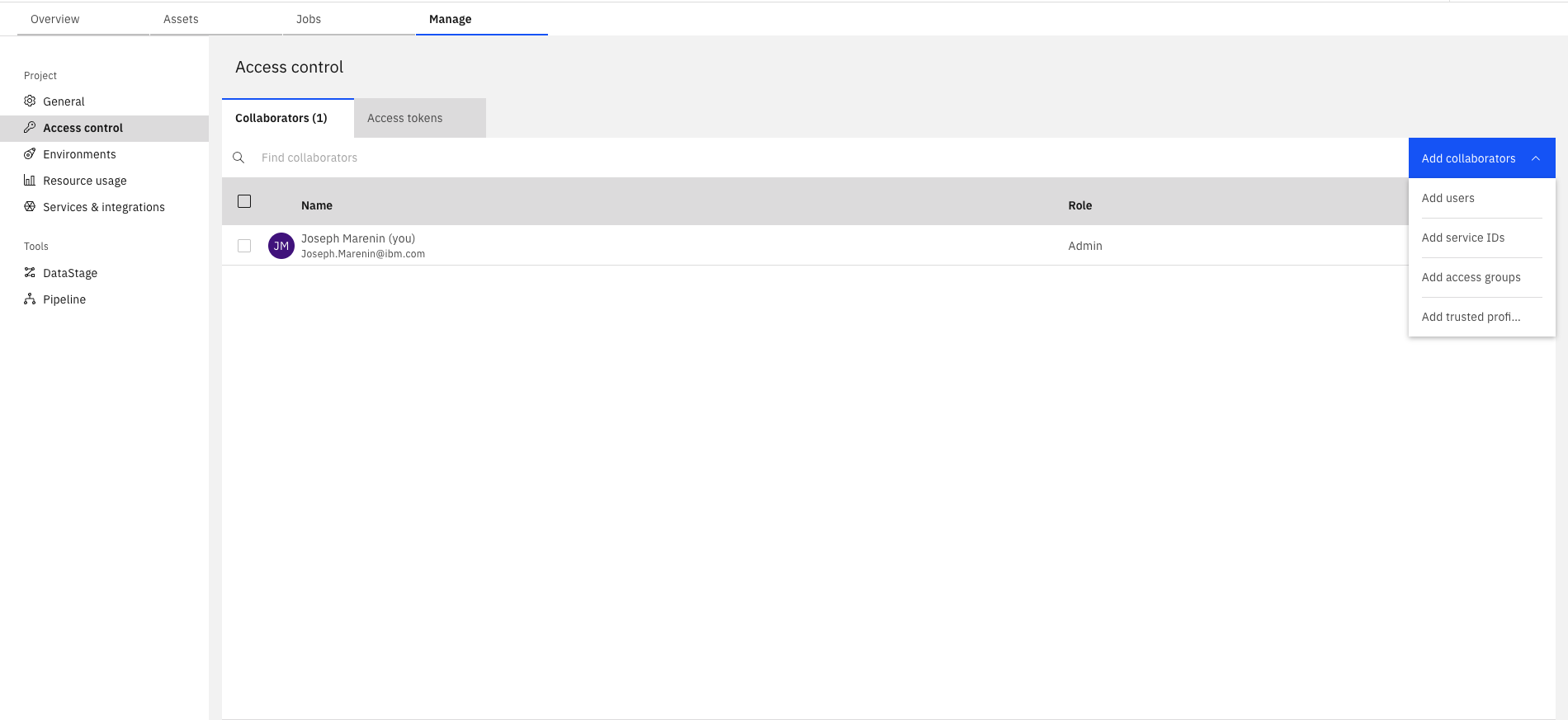
- There are four types of collaborators you can add to a project:
Service IDs (SaaS only)
Trusted Profiles (SaaS only)
Once you select the type of collaborator you would like to add, you can search for the appropriate collaborators to add.
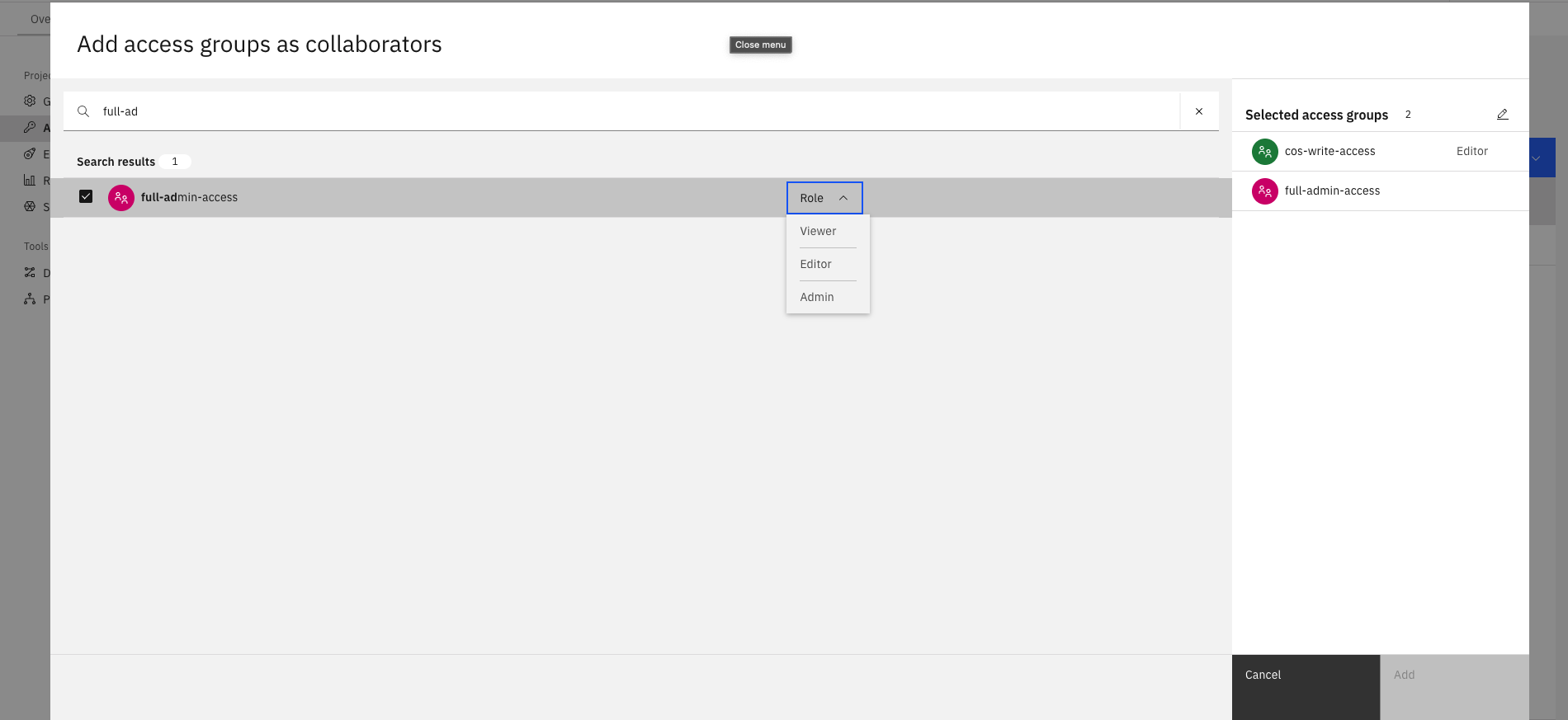
In the SDK, you can add collaborator(s) using either the Project.add_collaborator()
Project.add_collaborators() depending on how many collaborators you
would like to add. These functions accept a variety of collaborator types as well the parameter role which specifies their privileges.
- You can add the following type of collaborator types:
ServiceID(SaaS only)TrustedProfile(SaaS only)
>>> user
UserProfile(...)

>>> project.add_collaborator(user, role=CollaboratorRole.ADMIN)
ProjectCollaborator(user_name='myuser@ibm.com', role='admin', ...)

>>> access_group
AccessGroup(access_group_id='access_group_id', ...)

>>> service_id
AccessGroup(service_id='service_id', ...)

>>> project.add_collaborators([access_group, service_id], role=CollaboratorRole.EDITOR)
[ProjectCollaborator(user_name='access_group_id', role='editor', ...), ProjectCollaborator(user_name='service_id', role='editor', ...)]
Updating Project Collaborators’ Roles#
In the UI, you can edit a collaborator’s role by clicking on the edit icon next to their current role. From here, a modal will appear which will allow you to set the new role for the collaborator.
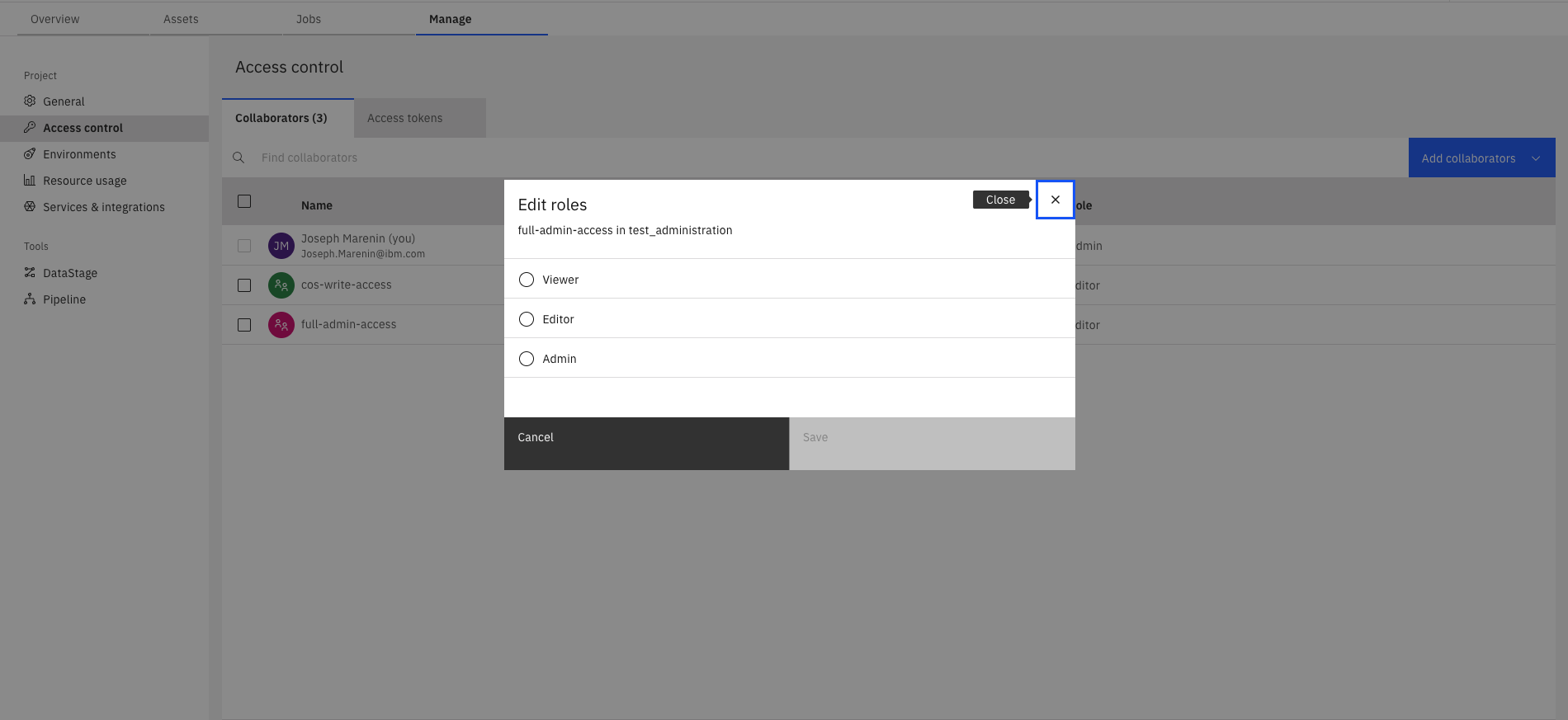
In the SDK, you can edit collaborator(s) roles by using the ProjectCollaborator.role
property and then either using the Project.update_collaborator()
Project.update_collaborators() method depending on how many
collaborators you would like to update.
>>> collaborator
ProjectCollaborator(...)

>>> collaborator.role = ProjectRole.EDITOR
>>> project.update_collaborator(collaborator)
ProjectCollaborator(user_name='myuser@ibm.com', role='editor', ...)

>>> collaborator1
ProjectCollaborator(user_name='myuser1@ibm.com', role='editor', ...)

>>> collaborator2
ProjectCollaborator(user_name='myuser2@ibm.com', role='editor', ...)

>>> collaborator1.role = ProjectRole.VIEWER
>>> collaborator2.role = ProjectRole.VIEWER
>>> project.update_collaborators([collaborator1, collaborator2])
[ProjectCollaborator(user_name='myuser1@ibm.com', role='viewer', ...), ProjectCollaborator(user_name='myuser2@ibm.com', role='viewer', ...)]
Removing Project Collaborators#
In the UI, you can remove a collaborator by pressing the remove icon to the right of their entry in the collaborator table.
In the SDK, you can remove collaborator(s) using either the Project.remove_collaborator()
Project.remove_collaborators() depending on how many collaborators you
would like to remove.
>>> project.remove_collaborator(collaborator)
<Response [204]>

>>> project.remove_collaborators([collaborator1, collaborator2])
<Response [204]>